
A brief history of India
India is one of the world’s oldest civilizations and has a long, rich, and diverse history that shaped not only South Asia but also the entire world. The story of Indian civilization begins with the Indus Valley Civilization, which emerged about 3500 years ago. As one of the earliest urban societies in human history, it is well known for its advanced city planning, drainage systems, and organized lifestyle.
Around the same period, the Aryans migrated into the Indian subcontinent and brought with them the Vedic culture, which laid the early foundation for Hinduism. The Vedic texts, rituals, and social structures would later influence Indian society for thousands of years.
A major turning point in Indian history came with the rise of the Maurya Empire. About 2300 years ago, under great rulers such as Chandragupta Maurya and his grandson Ashoka, the empire reached its height. Emperor Ashoka, after witnessing the suffering caused by war, adopted Buddhism and helped spread the religion across Asia roughly 2300 years ago. This made India the cradle of one of the world’s major religions, influencing countries such as Sri Lanka, Myanmar, China, Korea, and Japan.
Another golden chapter in India’s past is the Gupta period, which flourished about 1500 years ago. This era is often called the “Golden Age” of India because of remarkable progress in mathematics, astronomy, literature, and the arts. Important mathematical concepts, including the use of zero and the decimal system, developed during this period and later spread around the world.
From the 8th century onward, Muslim influence began to rise in India through various dynasties, notably the Delhi Sultanate. These rulers introduced new cultural elements, architecture, and administrative systems, blending with traditional Indian customs.
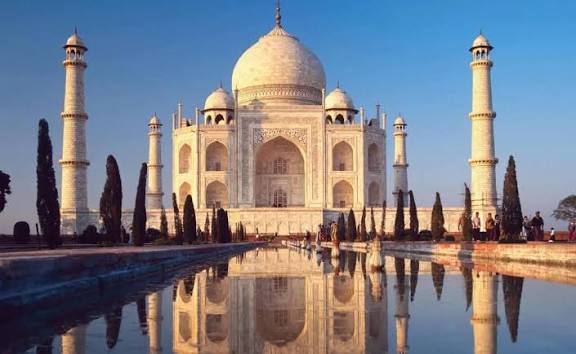
A later and even more influential Islamic dynasty was the Mughal Empire, which ruled from the 16th to the 18th century. The Mughals created a unique fusion of Hindu and Islamic cultures, producing magnificent architectural achievements. The most famous among them is the Taj Mahal, a symbol of love and one of the most beautiful buildings in the world.
Beginning in the 18th century, India gradually fell under British rule, a period known as the British Raj. British control deeply influenced Indian economy, education, and politics. In response, an independence movement emerged, led by Mahatma Gandhi, who introduced a powerful strategy based on non-violence and civil disobedience. His peaceful methods inspired millions and became a model for civil rights movements across the globe.
India finally achieved independence in 1947, but the country was divided into India and Pakistan, a historic event known as the Partition.
From the 1990s, India began implementing major economic reforms, transforming itself into one of the fastest-growing economies in the world.
India’s history, therefore, is a complex blend of ancient civilizations, cultural exchanges, religious developments, and political struggles. Each era has contributed to the vibrant, diverse, and dynamic nation that India is today.

Can you leave a comment here?