
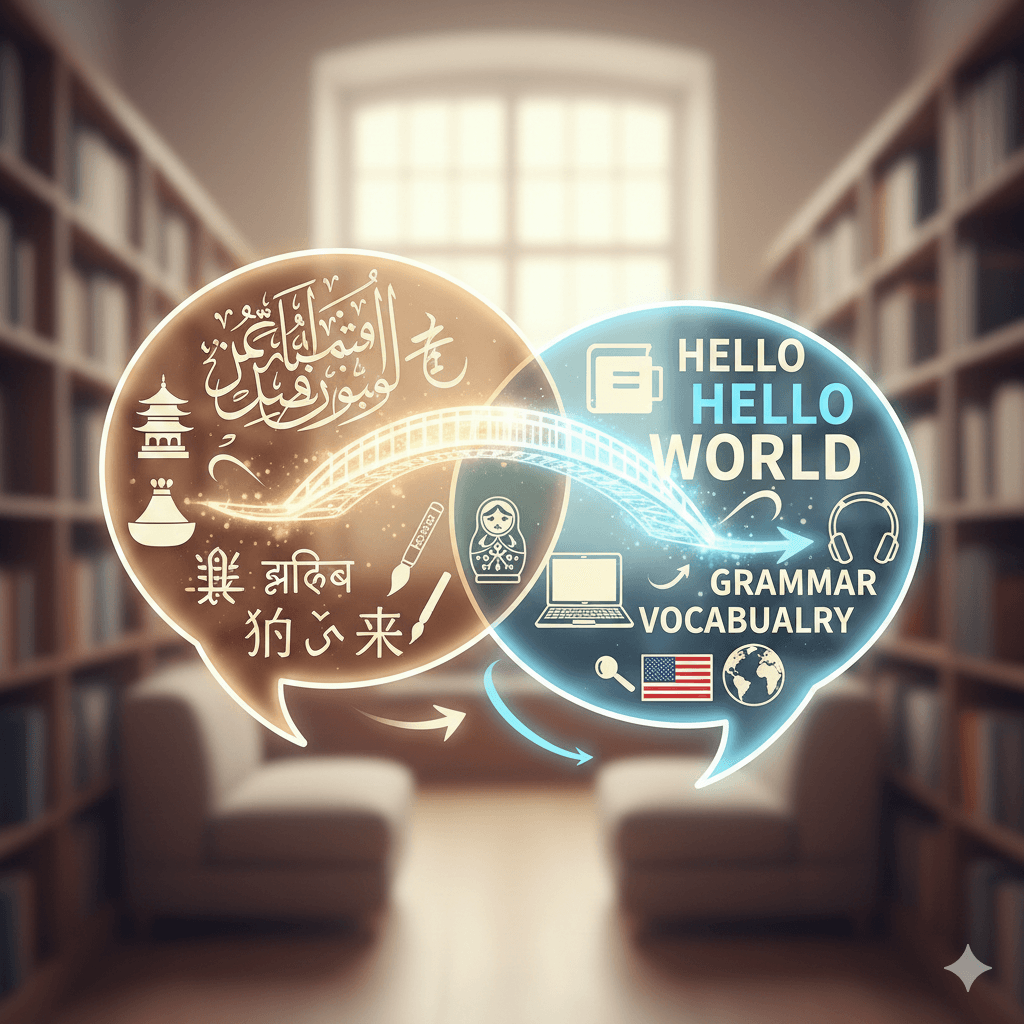
How to Learn English Through Your Mother Tongue?
Learning English can sometimes feel like climbing a mountain — exciting, but challenging. Many people think they have to completely “forget” their mother tongue to speak English fluently. The truth is quite the opposite: your native language is one of your best tools for learning English effectively.
In this post, let’s explore how you can use your mother tongue to learn English faster, understand better, and remember more.
—
 1. Build Bridges, Not Walls
When you start learning English, don’t see your native language as a barrier — see it as a bridge. Both languages share ideas, grammar structures, and cultural expressions. By comparing them, you understand why English works the way it does.
Example:
In your mother tongue, you might say “I have hunger” instead of “I am hungry.” By noticing this difference, you start to see how English uses adjectives instead of nouns for emotions and states. This awareness helps you think in English more naturally over time.
—
 2. Translate Intelligently
Translation isn’t a bad habit — it’s a learning strategy. In the beginning, translating words and phrases helps you connect new English vocabulary to familiar concepts.
Here’s how to do it smartly:
Translate phrases, not single words.
Notice which English words don’t have exact equivalents.
Gradually reduce translation as your confidence grows.
Over time, your brain will start making direct connections between ideas and English words — without going through your native language first.
—
 3. Use Your Native Language to Explain English Concepts
If you’re studying alone or teaching others, try explaining English grammar rules or new vocabulary in your mother tongue. Teaching something forces you to understand it deeply.
For example, explain to yourself (or a friend) the difference between “since” and “for” using examples from your own language. When you can explain it clearly, you truly understand it.
—
 4. Learn with Bilingual Resources
Make use of materials that combine English with your mother tongue:
Bilingual books and story apps
Subtitled movies or YouTube videos
Language exchange apps where you can practice both languages
These resources give you context and keep your learning grounded. You can understand meaning quickly without getting frustrated — and that motivation keeps you going.
—
 5. Respect Both Languages
Finally, remember that learning a new language doesn’t mean losing your first one. Your mother tongue carries your identity, culture, and way of thinking. English adds to that — it doesn’t replace it.
Being bilingual or multilingual is a superpower. You can switch perspectives, connect with more people, and understand the world in richer ways.
—
 In Summary
Learning English through your mother tongue isn’t a shortcut — it’s a smart, natural path.
Use what you already know to understand what you’re learning.
Compare, translate, reflect, and grow.
Step by step, your English will become stronger — not in isolation, but in harmony with the language that shaped you.
